
Introduction
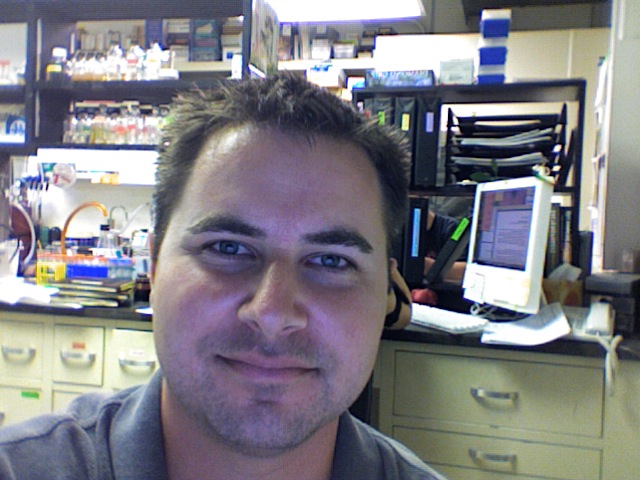
Gregory Broussard, Ph.D.
Welcome to my professional blog! I am currently a lecturer at Penn. State with a strong interest centered around developing course-based research experiences for undergraduates. By developing such experiences I hope to give true research experiences to a larger cohort of students, than is attainable with the research lab mentoring model. My hope is that this will enhance the career trajectories for future scientists and also make for higher scientific literacy among the populace. My main research interest center on Vibrio species and their phage and I am trying to build a course around this interest, but hope to branch out once this first course is up and running.
I have a long history of research mostly focused on mycobacteria and their phages. The genus Mycobacterium is most noteworthy for three human pathogens: M. tuberculosis, M. leprae, and M. ulcerans; the causative agents of tuberculosis, leprosy and buruli ulcers. Tuberculosis and leprosy have troubled man for perhaps tens-of-thousands of years and tuberculosis is the leading cause of human death by a single infective agent. M. ulcerans appears to be a recently emerging human pathogen causing skin ulcers and affecting mainly sub-Saharan Africa. Other notable species are M. marinum, the cause of fish tuberculosis, and M. smegmatis, a non-pathogenic species found in soil and used widely as a model organism for M. tuberculosis.
I started my career in this field by developing and applying a new animal model for human tuberculosis using the small fish Medaka (Oryzias latipes) and M. marinum. Using this model, I began to explore the question of whether mycobacterial infection together with subcarcinogenic exposure to known mutagens leads to heightened risk for tumor formation. We also looked at gene expression patterns in infected medaka.
In my postdoctoral work, I moved on to various aspects of functional genomics of mycobacteriophages centered around three main points: 1) learning more about the basic biology of the phage, 2) learning more about the basic biology of their host and 3) building genetic tools for the manipulation of mycobacteria, especially for use in the M. tuberculosis research community. We have recently published a paper concerning a new type of genetic circuitry found in the lysogenic switch of various unrelated mycobacteriophages in which phage immunity is dependent on integration. This type of switch greatly deviates from the lambda model in several ways and the fact that it is composed of a compact unit of three genes contained within ~2 kb and the lack of additional factors such as Xis, cII and cIII make it a tempting candidate for the prototypical ancestral switch. An offshoot to the characterization of these novel genetic switches is the development of a phage repressor based selection system that could be used in multi-drug resistant M. tuberculosis research, since the selecting agent would be a lytic phage instead of an antibiotic.
During my postdoctoral work, I was also highly involved in undergraduate research. I stayed closely connected to the Phagehunter program, which involves phage discovery, genome sequencing and annotation, and functional genomics. A main purpose of this program is to get undergraduates to undertake interesting investigations that lead to publishable results. This has done quite well and led to ~580 sequenced mycobacteriophage genomes (>299 in GenBank) and numerous papers. Besides going to phagehunter lab meetings, I was involved in directly mentoring individual undergraduate research projects centered around characterizing functions of individual genes in particular phages. This all led to my current direction of bringing research experiences to more and more undergraduates, so that they can get a true “feel” of what science is!
I plan to post various aspects of Vibrio, vibriophage, Mycobacterium and mycobacteriophage centered research on this site. I will also post topics centered on education of young scientists and course-based research experiences. You will find protocols and important topics; as well as personal career information such as my CV and published work. I hope you enjoy the website!
Header legend: The header is a collage from various aspects of my research in rough chronological order from left to right. At the far left is a survival graph from M. marinum infecting medaka, followed by a See-Through medaka infected with M. marinum expressing green fluorescent protein. The electron micrographs show the mycobacteriophages Acadian, which my wife and I discovered, and BPs, the first phage in which the new class of Integration-dependent genetic switch was found. Next is a diagram of this type of switch and what happens when it integrates into the host genome. This type of genetic switch seems to use tyrosine integrases unlike any studied before that lack N-terminal arm type DNA binding domains (next panel top). Below that are spots of wild type and various mutants of BPs on a lawn of M. smegmatis. And last is a splitstree diagram showing clusters of 220 sequenced mycobacteriophages, a wealth of material for future projects for the Hatfull lab and mycobacteriophage community in general! (all images are from my publications)
 Gregory W. Broussard, Ph.D.
Asking questions are genuinely nice thing if you are not understanding something completely,
but this piece of writing provides nice understanding even.